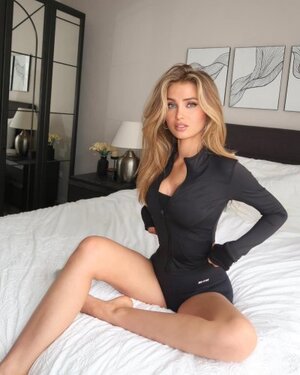
Marie Gillain — Biography
Born on June 18, 1975, in Liège, Belgium, Marie Gillain emerged as a notable actress at a remarkably young age. Her talent was first showcased in 1991 with her role in "My Father, This Hero," a performance that garnered her a nomination for the César Award for Most Promising Actress. In 1995, her turn in "The Bait" captured the attention of both audiences and critics, earning her another nomination for the Most Promising Actress César and the Romy-Schneider Prize in 1996. Gillain has since navigated a diverse cinematic landscape, exploring genres from comedy to crime, and has received César Award nominations for Best Actress for her work in "The Hunchback" (1997) and "All Our Desires" (2011). Beyond film, she has also dedicated herself to the stage, achieving significant recognition when she won the Molière for Best Actress in a Private Theater Performance in 2015 for her role in "Venus in Fur." Since 2008, she has also served as a dedicated volunteer ambassador for Plan Belgium, an organization focused on advocating for children in developing nations.
Growing up in the Belgian countryside, Marie Gillain experienced a simple and contented childhood immersed in nature. Her early years in a small village fostered a deep connection to the outdoors, a grounding influence that would serve her well as her career unfolded. Her passion for performance blossomed during her adolescence, leading her to participate in a theater workshop. In 1989, at the age of fourteen, she auditioned for Jean-Jacques Annaud's "The Lover," though she was not cast in the role.
Her breakthrough came a year later with "My Father, This Hero," where she co-starred with Gérard Depardieu and received her first César nomination. In 1993, her second film, "Marie," was filmed in her native Belgium. That same year marked a pivotal meeting with Bertrand Tavernier, who cast her in "The Bait." This role proved to be a turning point, earning her the Romy-Schneider Prize and another César nomination, solidifying her status as a rising star. This period of cinematic recognition also saw her undertake a significant theatrical role as Anne Frank. The year 1997 saw Gillain further cement her cinematic presence, appearing in productions such as the Franco-Italian "Les Affinités électives," the dramatic comedy "Un air si pur...," and the grand production "Le Bossu." She also explored less mainstream cinema with roles in Ettore Scola's "The Dinner" and Ferzan Ozpetek's "The Last Harem" before returning to French productions.
The 2000s saw a more measured progression in Marie Gillain's career. In 2000, she appeared in Emmanuel Mou
Growing up in the Belgian countryside, Marie Gillain experienced a simple and contented childhood immersed in nature. Her early years in a small village fostered a deep connection to the outdoors, a grounding influence that would serve her well as her career unfolded. Her passion for performance blossomed during her adolescence, leading her to participate in a theater workshop. In 1989, at the age of fourteen, she auditioned for Jean-Jacques Annaud's "The Lover," though she was not cast in the role.
Her breakthrough came a year later with "My Father, This Hero," where she co-starred with Gérard Depardieu and received her first César nomination. In 1993, her second film, "Marie," was filmed in her native Belgium. That same year marked a pivotal meeting with Bertrand Tavernier, who cast her in "The Bait." This role proved to be a turning point, earning her the Romy-Schneider Prize and another César nomination, solidifying her status as a rising star. This period of cinematic recognition also saw her undertake a significant theatrical role as Anne Frank. The year 1997 saw Gillain further cement her cinematic presence, appearing in productions such as the Franco-Italian "Les Affinités électives," the dramatic comedy "Un air si pur...," and the grand production "Le Bossu." She also explored less mainstream cinema with roles in Ettore Scola's "The Dinner" and Ferzan Ozpetek's "The Last Harem" before returning to French productions.
The 2000s saw a more measured progression in Marie Gillain's career. In 2000, she appeared in Emmanuel Mou